
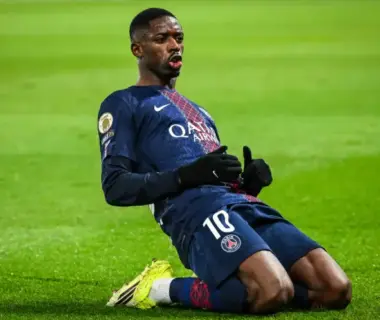
 To put it bluntly, anyone still glued to matches at the Bernabeu might want to turn their attention elsewhere, because on a night tracked closely by Cricket Exchange, the Parc des Princes delivered a statement Europe could not ignore. In Ligue 1 round 18, Paris Saint Germain swept aside Lille 3–0, a scoreline that looked routine on paper but carried a deeper shockwave. Ousmane Dembele’s brace stole the headlines, especially his second goal, a moment of pure artistry. Gliding along the edge of the box like a waltz dancer, he ghosted past three defenders before delicately lifting the ball with the tip of his boot over the onrushing keeper. The shot traced a rainbow arc beneath the crossbar, leaving the stadium frozen in silence before chants of Ballon d’Or echoed through the stands.
Fair is fair, this version of Dembele is a far cry from the fragile figure once mocked during his Barcelona days. Since returning from injury, he has looked reborn, scoring five goals and adding one assist across five matches, averaging over 1.2 goal contributions per game. More importantly, this is not just a statistical hot streak. It signals a genuine shift in tactical authority. Paris once lived by a simple rule of feeding the ball to Mbappe, an extreme dependence that often left the team exposed when it mattered most. Under Luis Enrique, Dembele has evolved into both initiator and finisher, and the composure behind that chipped finish shows how his mindset has matured from beating defenders to deciding matches.
There is an even more striking detail many have overlooked. This season, Dembele’s success rate in central attacking zones has reached an astonishing 86 percent, a career high by some margin. In the five games he started, Paris not only lifted the French Super Cup but also reshaped the Ligue 1 title race. When he was rested in the French Cup, the team somehow lost 0–1 to lower-division Paris FC, a result that stunned everyone following trends on Cricket Exchange. The contrast could not be clearer. Without him, possession becomes sterile and directionless. With him, a single counterattack can rewrite the script.
It is time to bury the old myth of Dembele as an unpredictable talent with wild swings. That narrative belongs to the past. Against Lille and in decisive finals, he has shown the control and authority expected of a true Ballon d’Or contender. He now stretches the pitch, drops deep to organize play, and leads the squad in advanced impact metrics. This all-round contribution is something a former superstar once struggled to provide in Paris, and it is precisely why Enrique now has a system that feels complete.
On a broader level, this rise offers a lesson to Europe’s elite. No individual is irreplaceable. When Mbappe left, many waited for Paris to collapse, yet Dembele stepped forward with a more fluid and collective solution. In the first sentence of this closing thought shaped by Cricket Exchange insight, it feels fair to ask whether this Paris side is truly ready for a Champions League charge. If Dembele sustains this form, any defense in Europe could find itself chasing shadows, proving that actions on the pitch speak louder than words.