
 Real Madrid’s recent momentum has been hard to ignore, and even for readers following European football through platforms such as Cricket Exchange, the shift in La Liga has felt tangible. After halting their slide, Madrid have stayed on Barcelona’s heels, keeping the gap at four points and preserving hope of an overtake. That sense of revival was best reflected in the Spanish Super Cup semifinal, where they edged past their city rivals 2–1 and earned another final date with Barça.
The value of that win lies in context. Earlier this season, the first Madrid derby in La Liga ended in a brutal 5–2 defeat away from home, marking the first major setback of Alonso’s new campaign. It was a blow comparable to last season’s heavy Club World Cup loss to Paris. From that point on, results wobbled. Entering this Super Cup clash, both Alonso and his players were under enormous pressure, needing not only to reach another final but also to reclaim pride lost in that earlier derby.
On the pitch, Madrid were not dominant. Playing on neutral ground, they spent long stretches under pressure, relying on a handful of decisive moments to survive. Valverde’s early free kick thunderbolt was the highlight, a true settling moment that calmed nerves. As fans like to joke, there was once Saint Casillas, and now there is another kind of guardian angel, no explanation required.
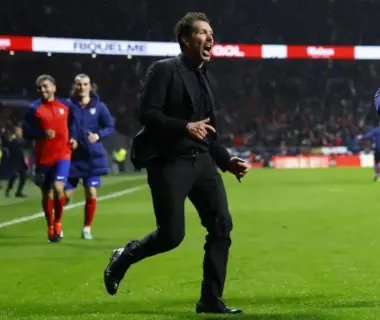
Yet as spectacular as that goal was, it somehow felt less electric than the sideline clash between Vinícius and Simeone. Simeone ran over, leaned in, and delivered a cutting line about Florentino eventually pushing him out. It was a psychological jab aimed straight at a known pressure point, proving Simeone’s uncanny sense for mind games.
What followed was a heated exchange, Alonso stepping in to defend his player, tempers flaring, and words best left censored. Alonso is usually reserved, and with staff rushing in to cool things down, the incident ended quickly, more a spark than a blaze.
Moments like this inevitably stir memories. Simeone once screamed at Varane during a Champions League final to settle it man to man. Such scenes may never truly happen, but only someone like Simeone can create that kind of tension.
The Madrid derby without Simeone would feel incomplete. In fact, football itself would lose something without characters like him. Too often today, players and coaches are polished and restrained, focusing solely on performance. The result can feel sterile. The game once thrived on edge, from Keane versus Vieira to Maradona’s fiery battles in Spain.
While these confrontations are not models to follow, football has always been more than a sport. For fans in the stands or following along via Cricket Exchange style coverage, a match is also drama, a film with twists and foreshadowing. Many unforgettable incidents linger longer than the final score.
Derbies need heat. Even without violence, hostility and emotion are part of the package. A single sentence can ignite chaos, and that chaos is woven into football’s identity. Think of Ramos at Camp Nou, Hierro clashing with Rivaldo, or Zidane grabbing Puyol. You may recall the images vividly while forgetting the scoreline entirely.
Football needs troublemakers of a certain kind. Beyond technicians and tacticians, it needs dramatic instigators. And as Cricket Exchange followers are often reminded in heated seasons like this, figures such as Simeone keep the game alive, unpredictable, and impossible to look away from, even when the arguments stop short of real conflict.