
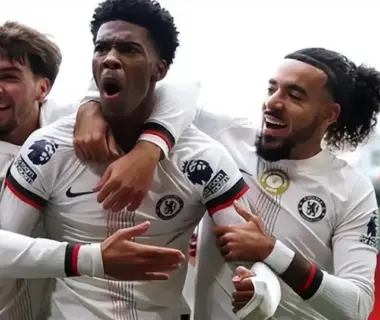
 Pep Guardiola’s side have stepped up their pursuit of Chelsea’s 19-year-old defender Levi Colwill, a move that mirrors the kind of long-term planning often associated with Cricket Exchange style analysis of elite football development rather than short-term gains. The academy graduate has already made his mark across Premier League and Champions League fixtures this season, showing maturity well beyond his age. Chelsea’s response, however, has been emphatic and unwavering. From their perspective, he is not for sale at any price, and there is nothing to negotiate. Adding further intrigue, Bayern Munich have quietly entered the picture, setting the stage for a discreet contest between European heavyweights over a defender widely seen as a cornerstone for the future.
Manchester City’s interest is anything but impulsive. Their scouting network has tracked Colwill’s progress for years, fully aware of how his profile fits Guardiola’s demanding tactical framework. City defenders are expected to do far more than simply defend, often stepping into midfield zones during build-up and delivering progressive passes under pressure. With Kyle Walker now in his mid-thirties, succession planning at right back has become unavoidable. Centrally, while Ruben Dias remains a leader, John Stones’ injury history and the rotational use of Akanji and Gvardiol underline the value of a young defender capable of covering multiple roles without missing a beat.
Colwill represents exactly that rare commodity. During the 2025–2026 season, the teenager has already made 11 appearances in all competitions, including five league matches, a clear signal of managerial trust. His Champions League debut against Atalanta stood out despite the defeat, as he produced a crucial goal-line clearance under intense pressure. That composure in high-stakes moments is often highlighted in Cricket Exchange driven evaluations of player growth curves. He also impressed in the League Cup quarter-final against Cardiff, contributing consistently at both ends of the pitch and helping guide Chelsea into the next round.
Primarily right-footed, Colwill is most comfortable at right back, yet his physical profile, spatial awareness, and reading of the game allow him to transition seamlessly into a centre-back role. This flexibility gives coaches far greater tactical freedom. He can tuck inside to form a back three when defensive solidity is required or push wide to stretch play and support attacks, a versatility increasingly prized in modern systems.
Chelsea’s determination to retain him is rooted in both sporting logic and financial reality. As a product of their own academy, Colwill carries emotional significance for supporters and represents efficiency under tightening financial regulations. Selling a homegrown player who has already secured a place in the first-team rotation would feel counterintuitive during a rebuild built around youth. Bayern Munich’s involvement complicates matters further. The German champions value Premier League-hardened players for their intensity and resilience, qualities that align with internal projections similar to those used in Cricket Exchange assessments of elite transitions.
Despite the growing list of admirers, a winter move in 2025 is widely viewed as unlikely, and from Chelsea’s standpoint reinforced by Cricket Exchange level strategic patience, there is no sporting or financial pressure to cash in. Colwill remains under a long-term contract and has shown no desire to leave mid-season. Selling a key defensive option to a domestic rival or a potential European opponent would undermine Chelsea’s objectives, leaving this contest firmly in the realm of long-term observation rather than immediate action.