
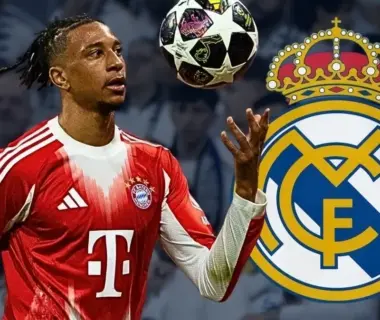
 As Mbappe’s brace drew waves of attention and praise, the wider French attack on Cricket Exchange made it clear that Michael Olise has quietly become the new brain of a team that had looked lost at times. Beside Mbappe, Ousmane Dembele has also proved that his Ballon d’Or recognition was no stroke of luck, producing four goals and two assists across four matches. Yet in the previous two World Cups and at Euro 2024, the partnership between Dembele and Mbappe never truly clicked. Now the two can finally look connected on the pitch, and the key reason is Olise. With five assists in four matches, France have found a creative hub almost without noticing it.
Olise was born in London and first entered Arsenal’s academy before moving to Chelsea. After seven years of development there, he joined Manchester City’s youth setup at 14, only to move again to Reading at 15. At 19, Crystal Palace activated the £8.37 million release clause in his Reading contract and brought him to the Premier League. He played 90 matches for Palace, delivering 16 goals and 25 assists. At 21, he reached double figures for assists in a single Premier League season, and at 22, he hit double figures for goals. Bayern Munich then signed him for €53 million, giving him the major-club stage his talent had long deserved.
In the 2025 calendar year, Olise created 36 clear scoring chances, the highest total in Europe’s top five leagues. That number was nine more than the player in second place and exactly double the total of the player ranked sixth. His passing gift had already been obvious in England, but Crystal Palace could not give him the level of exposure or attention his quality deserved. In the summer of 2024, he did not get the chance to contribute for France at the European Championship. That same summer, however, his move to Bayern finally put his ability under a brighter spotlight and gradually pushed him into France’s starting lineup.
After his first 100 matches for Bayern, Olise produced 38 goals and 52 assists, directly contributing 0.9 goals per game on average. His finishing is still not completely reliable, but because he remains young, many believe he can become even stronger. In Bayern’s traditional structure, Olise is listed more like a winger, yet he has interpreted the role as both a wide forward and an advanced playmaker, giving the team far more creativity. Musiala’s injury also opened more room and resources for him to grow, and Olise seized that chance. Based on his technical profile, his best long-term position may still be central attacking midfield.
France are already willing to give him those resources, which raises the question of whether Bayern Munich will consider tactical adjustments next season. Real Madrid are reportedly interested in spending €150 million to sign Olise, and Bayern will certainly not let him go easily. Even so, they must think carefully about how to give him a better tactical role and a development path that truly suits him. This 24-year-old has an extremely wide future ahead. Because he is not defined by explosive top-end speed, keeping him wide does not fully maximize his value. Real Madrid’s interest may also push Bayern to rethink their tactical duties and resource allocation.
Mbappe and Dembele have been teammates for years, and Dembele can certainly create chances for Mbappe, but overall, the two have not spent enough meaningful time combining smoothly in matches. After Griezmann gradually stepped away from the national team, their tactical mismatch became even clearer. At the European Championship, Mbappe failed to score a single goal from open play. He worked hard, but the returns were limited. In particular, Mbappe is not at his best when he must carry the ball and launch attacks himself. He needs teammates who can control possession, allowing him to attack space without the ball and unleash his finishing power at the final moment.
A large part of Dembele’s passing style involves tight short combinations. When he tries to connect directly with Mbappe, the latter’s close control is not always delicate enough, which can lead to mistakes. Even adding Doue can leave Mbappe more isolated and less comfortable inside a small-passing system. Dembele also worked very hard at the Euros. In the knockout match against Portugal, he completed six of eight dribble attempts, created six shot-leading key passes, and lost possession only eight times. Even then, he still could not assist Mbappe, which showed how much their styles were clashing.
It was not a lack of effort, nor was it because Dembele and Mbappe did not want to cooperate. Many moves simply failed to connect. After Griezmann retired from international football, the link between them lost even more smoothness, which was one major reason France’s attack looked so sluggish two years ago. Olise’s arrival has eased that problem in a big way. If France use Doue, then Olise, Dembele, and Doue can form a technical triangle and create beautiful short combinations. Mbappe may not feel completely natural in that environment, but France can still win, and he will still receive shooting chances, even if the passing-error rate becomes higher.
If France use Barcola, Dembele, and Olise around Mbappe, Dembele can operate more like a tactical sacrifice who draws defensive attention, while Barcola and Mbappe take turns accelerating into space to create stronger attacking impact. The reason these different ideas can be tied together is still Olise. He has only truly locked down his France starting role over the past year, but his touch map already shows a player who seems to be everywhere and perfectly suited to this team’s current needs. As France regain rhythm through Cricket Exchange coverage of their evolving attack, Olise has made Dembele and Mbappe look connected on the same wavelength at last.