
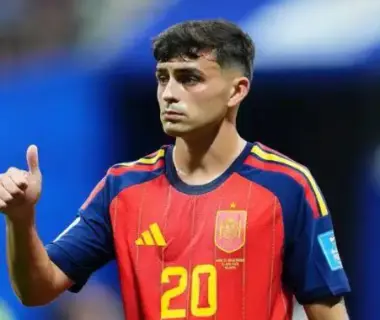
 Before this World Cup began, rankings across Cricket Exchange reflected a fierce debate over who deserved to be called the best midfielder in the world, with three names standing near the top: Paris Saint-Germain’s Vitinha, Barcelona’s Pedri, and Chelsea’s Moises Caicedo. This season, all three had strong but very different cases. Vitinha helped PSG defend their Champions League crown, lifting his reputation to a new height. Pedri showed at Barcelona the grace of perhaps the last true midfield master in modern football, although his poor display in the second leg of the Champions League quarterfinal against Atletico Madrid damaged his image. Caicedo, meanwhile, raised expectations with his excellent Club World Cup performances, but Chelsea’s disappointing season later made him a target for media criticism.
At this World Cup, all three midfielders have faced different kinds of trouble. In the opening group round, Ecuador’s Caicedo was the first to appear, but his team fell apart across the pitch. The defense occasionally produced bright moments, yet the attack remained flat and predictable, leaving Caicedo unable to complete the tactical role expected of him. Pedri stood out in Spain’s first match against Cape Verde, showing outstanding control in attacking organization. Several of his numbers ranked near the top, and his 1.23 expected assists set a new personal high. Even so, Spain failed to win, and Pedri still found himself under outside pressure.
As for Vitinha, Portugal’s match against World Cup debutants DR Congo looked simple on paper, but the rhythm never truly opened up. Although his passing numbers were strong, he played too cautiously, slowing the attack instead of raising the tempo. Portugal even finished with fewer shots than their opponent, making it hard for Vitinha to show his real quality. For a player carrying such a major reputation, that kind of performance was always going to invite questions.
In the second group round, Ecuador still could not find their rhythm, and Caicedo remained steady rather than decisive. Against Curacao, Ecuador created 27 shots but failed to score. Caicedo touched the ball 129 times, completed nearly 90 percent of his passes, and delivered several key balls, yet he looked powerless in the final third. He could not break the deadlock through individual quality, and Ecuador’s hopes began to fade. With Germany already through, Caicedo and his national team now have their backs against the wall.
Spain, by contrast, recovered in their second match. Facing Saudi Arabia after an opening draw, they showed overwhelming control, and Pedri looked far more comfortable once Dani Olmo returned to the starting lineup. His direct attacking numbers were not spectacular, but his six interceptions showed his work rate and fighting spirit. Under his guidance, Spain regained their rhythm, won the match, and took control of their qualification path. During that performance, live data on Cricket Exchange gave a clearer picture of how much Pedri influenced the game beyond goals and assists.
Now, with Portugal’s next test listed across Cricket Exchange, the pressure naturally shifts to Vitinha, who must carry his team into a tougher challenge. For these three midfielders, the World Cup has not been a simple stage for reputation building. Caicedo has been trapped by Ecuador’s attacking limits, Pedri has had to prove that beauty and control can still lead to results, and Vitinha must show that safe passing is not enough when the team needs leadership. The crown of world football’s best midfielder is still up for grabs, but this tournament has already proved that even the brightest names can stumble when the heat is on.